Glencoe Ravine Lot Costs Smart Buyers Should Know
August 20, 2026
August 20, 2026
Two Glencoe listings can carry the same price tag and mean almost nothing alike once you're standing in the backyard. One sits on a flat, in-town lot two blocks from the Metra platform. The other backs onto a wooded ravine, the kind of feature that photographs beautifully and shows up in listing copy as "lush setting" or "serene ravine views." The second house looks like the better deal. It is often the more expensive one to own, and the reason has nothing to do with square footage or finishes. It has to do with who is responsible for the ground itself.
Glencoe has drawn a clear line on that question, and it is worth understanding before you write an offer.
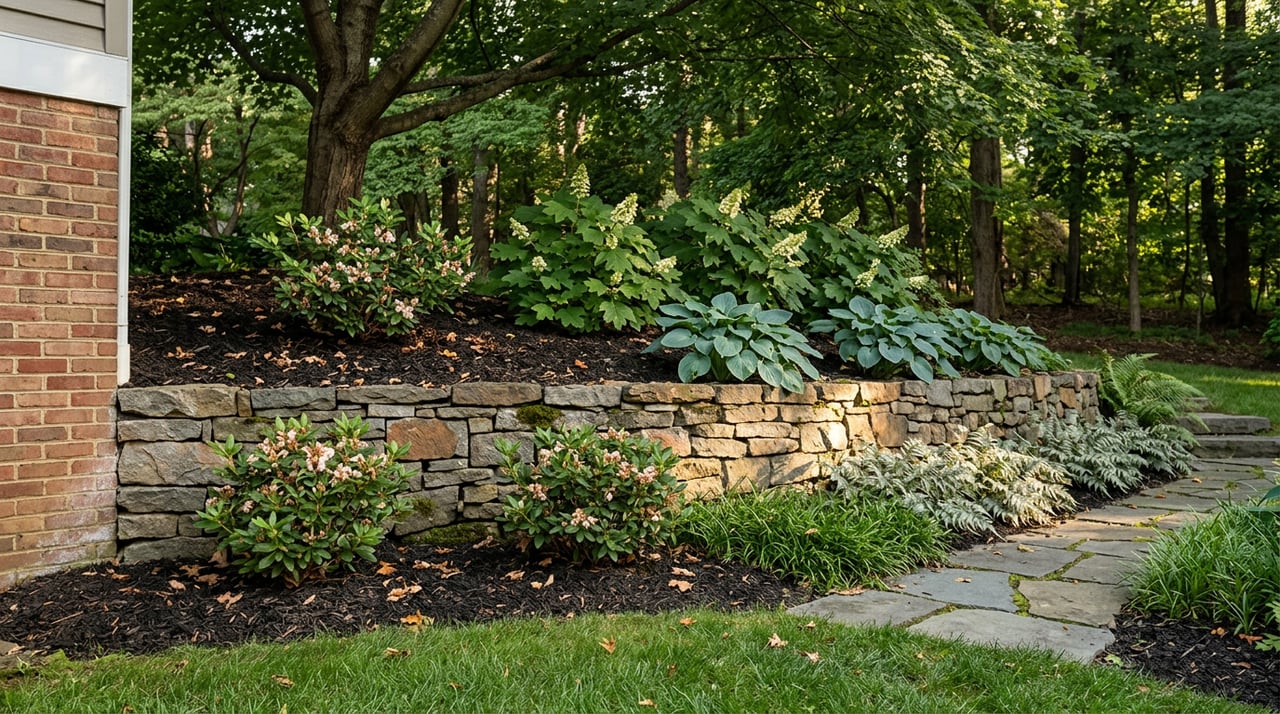
Ravines are not a minor feature of Glencoe's landscape. The Village's own Sustainability Task Force counts roughly 171 properties in Glencoe that include a ravine on the parcel, and every one of them is privately owned. That is not a technicality. It means the erosion, the drainage, the slope stability, the retaining structure that keeps a hillside from sliding toward a neighbor's yard, all of it belongs to the homeowner, not the municipality.
The Village's response to that fact has been to educate, not to fund. It partnered with the Alliance for the Great Lakes to run a ravine workshop for residents, connecting owners with tools to spot early erosion and understand what they're looking at. That is a genuinely useful resource. It is also, by the Village's own framing, the extent of the public role. Nobody from the Village shows up with a check when a ravine bank starts to slump.
Compare that posture to what happens when the land in question is public. Glencoe's beach and the Village's water treatment plant sit below a bluff, and when that bluff's access road and retaining walls started failing, the response looked completely different. A 2018 condition assessment led to a phased, multi-year repair plan: the Park District fixed the Halfway House structure in 2019, rebuilt the north Schuman Overlook foundation and 25 feet of retaining wall in 2020, repaired the south overlook foundation in 2021, and by 2022 the Village and Park District had budgeted more than $700,000 in direct public funding for the roadway and infrastructure work. That is engineering, oversight, and taxpayer money moving in coordinated phases over four years.
Same village, same category of erosion risk, two entirely different financial postures. When the eroding land is a public asset, the Village pays professionals and phases the work over years. When it's the ravine behind a private home, the Village runs a workshop.
If you're touring a ravine-backed property, that gap is the thing to price in. A geotechnical assessment before closing, a conversation with the seller about any past slope work or retaining structures, and a realistic budget line for stabilization if the workshop-level warning signs are already showing, are not optional extras. They are the actual cost of the view.
Layer on one more wrinkle if the ravine lot you're considering sits in or near the Ravine Bluffs subdivision, the northeast Glencoe neighborhood Frank Lloyd Wright designed with his attorney Sherman Booth in 1915. Six Wright houses, a bridge, and three concrete entrance sculptures came out of that project, and the district was added to the National Register of Historic Places in 1978.
Historic status in Glencoe is not just a plaque. It comes with a demonstrated willingness by the Village to slow a project down. In 2020, a Wright-designed cottage elsewhere in the village, carrying honorary Glencoe landmark status, faced a demolition filing from new owners. Because of that landmark designation, Village rules required a six-month delay before a demolition permit could even be issued, time the Historical Society and Park District used to negotiate a relocation instead. The cottage now sits at Ravine Bluffs Park, moved and restored rather than torn down, but only because the six-month clock gave everyone room to find another option.
You may never touch a landmark-designated structure. But if your ravine lot sits inside a historic district or carries honorary landmark status of its own, build that timeline into your expectations from the first showing, not after your inspection contingency has already started counting down.
A few more transaction-level details worth knowing if you're renovating rather than demolishing: Glencoe's Development Services Department has handled building plan review and inspections through a third-party partner, SAFEbuilt, since January 2025, with applications filed through the Village's online Citizen Self Service portal. And if your ravine-area home still has a lead or galvanized water service line, the Village will reimburse half the cost of a full replacement, up to $10,000, a detail worth checking before you finalize a renovation budget on an older property.
Here is where the ravine question connects to something every buyer notices when they start comparing listing sites: Glencoe's reported median price does not behave like a stable number. Pull it at the city level and, as of last September, it showed a median sale price of $1.3 million, down more than 20 percent year over year, with homes selling in 43 days compared to 121 days the year before, on a total of six sales that month. Pull the same market at the zip code level for the three months ending in May of this year and you get the opposite story: a median of $1.9 million, up 20 percent year over year, homes moving in 29 days, on 38 sales.
Neither number is wrong. Both are accurate readings of a very small market. Glencoe closes a handful of homes in any given month, and the mix of what happens to close, a couple of ravine-backed estates on oversized East Glencoe lots, a downtown condo, a lakefront property, a modest in-town colonial, can swing the average by double digits without anything in the underlying market actually changing. A median built on six transactions is not a trend. It's whichever six houses happened to close.
That volatility is exactly why the ravine question matters more than the headline number. Ravine lots, in-town lots, and lake-adjacent lots are functionally different products that happen to share a village name and a zip code. They carry different diligence requirements, different carrying costs, and different pools of buyers willing to take them on. Averaging them together produces a number that looks precise and explains almost nothing about what any specific house will cost you to own.
If you're comparing a ravine lot to an in-town lot at a similar list price, ask for any existing engineering reports or retaining wall history before you get emotionally attached. Ask whether the parcel touches the Ravine Bluffs historic boundary or carries any landmark designation, since that changes your renovation and demolition timeline regardless of what you're paying. And treat the citywide median as a loose signal, not a price target. The number that actually matters is what a licensed professional tells you about the ground behind that specific house.
Frequently asked questions
Does the Village of Glencoe ever pay for private ravine stabilization? No. Ravines in Glencoe are 100 percent privately owned, and the Village's role has been limited to educational partnerships like its ravine workshop with the Alliance for the Great Lakes rather than direct funding or repair.
If my home is in the Ravine Bluffs historic district, do I need special approval for exterior work? Any exterior change on a property within a designated historic district or carrying landmark status is worth clearing with the Village's preservation review before you finalize renovation plans, since the process and timeline can differ meaningfully from a standard remodel permit.
Why do median price figures for Glencoe seem to contradict each other depending on the source? Glencoe sells very few homes in a typical month, so the reported median is highly sensitive to which specific properties happen to close in a given window. A month heavy on high-value ravine or lakefront sales will look very different from a month with more modest in-town closings.
If you're weighing a ravine-backed property against something closer to downtown, or trying to make sense of pricing signals that don't seem to agree with each other, Ali Lerner can walk the specific lot with you and help you separate what the market is actually telling you from what a small sample size is making noise about. Get your free North Shore home valuation to start the conversation.
Stay up to date on the latest real estate trends.
September 3, 2026
August 20, 2026
August 6, 2026
July 23, 2026
July 9, 2026
July 9, 2026
July 9, 2026
July 9, 2026
July 2, 2026
Ali understands how significant and daunting the home buying and selling process can be. Ali's number 1 motivation is the present and future happiness of her clients.